

Home » Malta island » Mdina and Rabat
Mdina and Rabat are two popular towns in Malta (in the southwest of the main island), and each is admired for very different reasons.
Mdina is one of Malta’s most popular tourist destinations because there’s no place like it anywhere. Sitting on top of a hill overlooking large parts of Malta, it’s a fortified medieval town enclosed in bastions, small but rich in history. It’s filled with centuries-old buildings that have been well-maintained throughout the ages.
Wandering through its narrow streets and alleys, Mdina genuinely feels like history coming to life. The only real giveaway is the local residents’ cars parked within.
Rabat, the village that’s located on Mdina’s doorstep (and once considered to be its suburb), on the other hand, is known for its quiet, more rural character and natural beauty. Apart from offering a few key museums and points of interest, Rabat is also known for one of the few forested areas the country knows, Buskett Gardens, the entrance to which can be found on the outskirts of the village.
A typical Maltese town that still hosts traditional village festas, there’s a lot of character to discover on a leisure walk through its streets.
In terms of accommodation, neither of the villages is a popular place to actually stay, although a few boutique hotels can be found. If exploring the country is your priority and you’re looking for a quieter place to stay, it’s definitely a lovely location to consider. Mdina, even though a popular tourist destination, rarely really feels busy.
If you decide to stay elsewhere, it’s an area to visit multiple times, for sightseeing but also to enjoy a beautiful part of Malta in the evening.
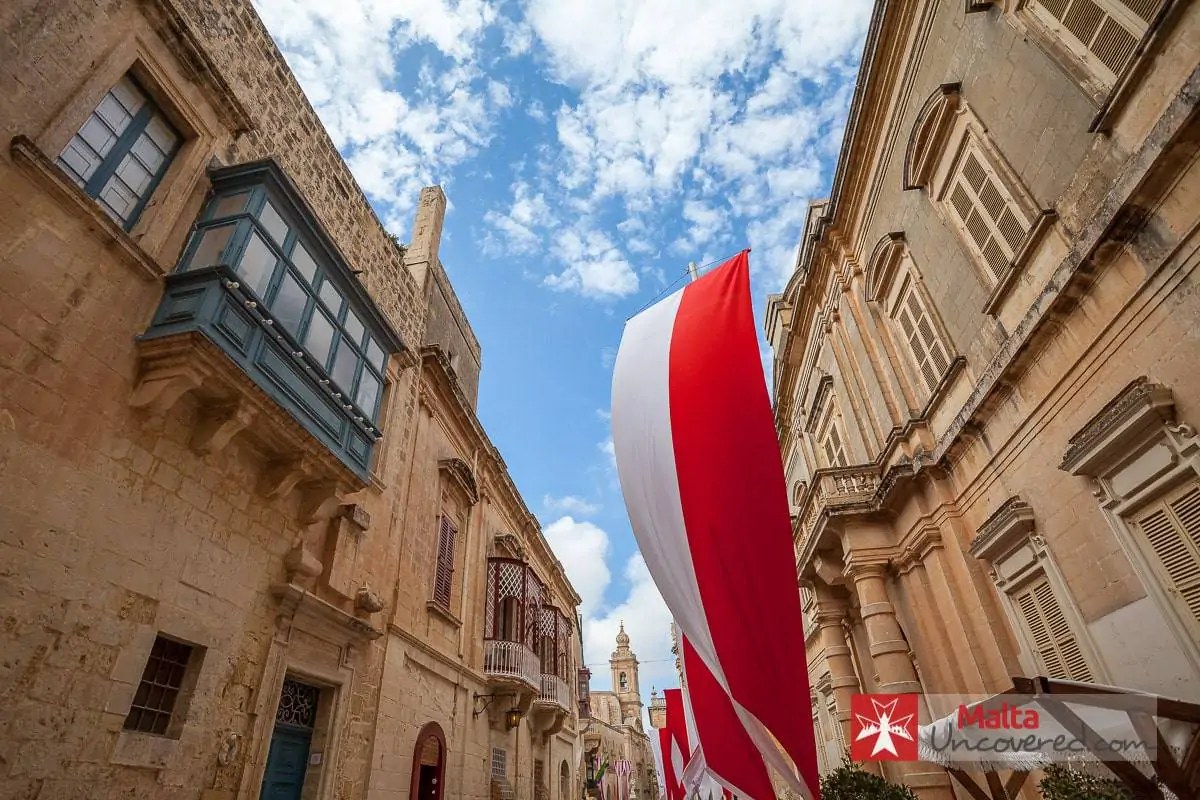
Mdina, also called the Silent City, is surrounded by fortified bastion walls and sits on top of one of the highest hills of Malta. The town, as it exists today, was built in medieval times on the footprint of a city called Maleth, which was founded in the 8th century BC by Phoenician Settlers. With its tall outer walls having been erected in the 11th century, many buildings built several centuries ago have been preserved, and its narrow alleys tell tales of centuries of history and the various rulers that governed Malta.
Mdina is visible from large parts of Malta, and the view of the skyline as you drive up to Rabat from the centre of the island is iconic. There’s a mythical sense to the city when you enter it, and you can almost taste the history as you walk its streets. There’s no mistaking that this city was built with pride for important people who wanted to build a small fortress that would be easy to defend from enemy attacks.
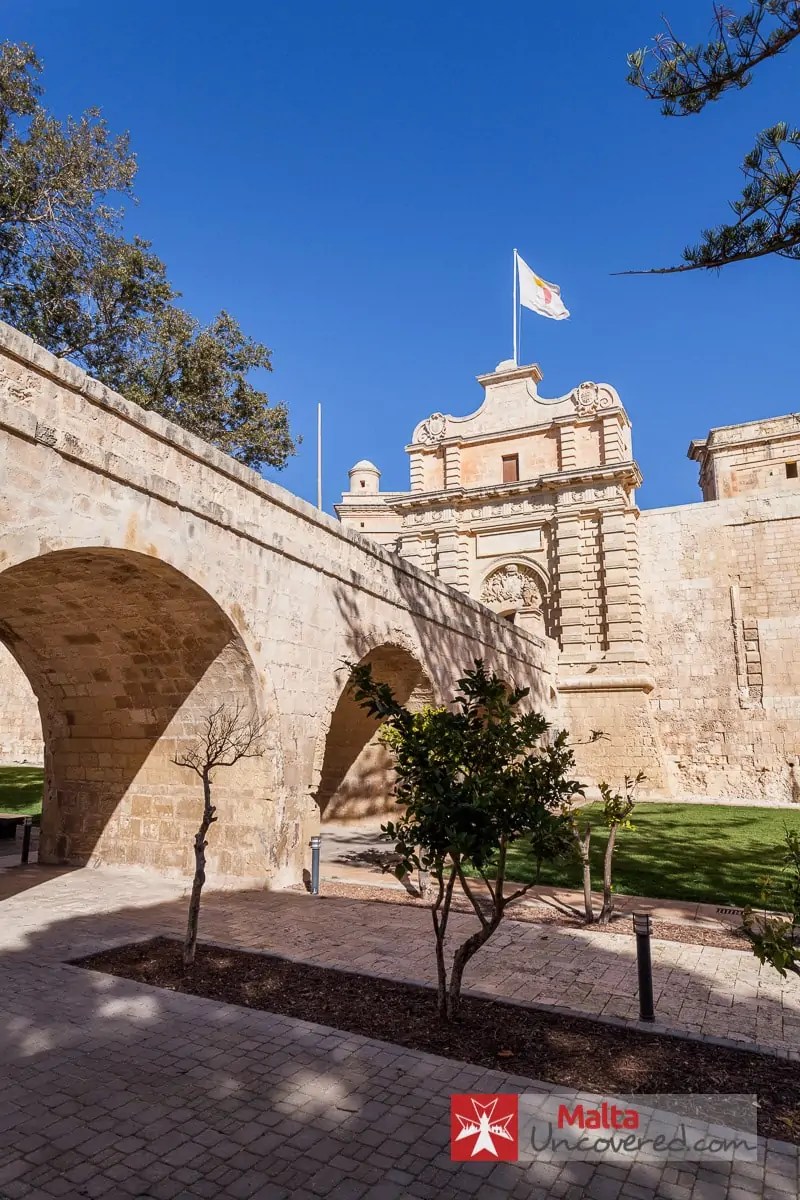
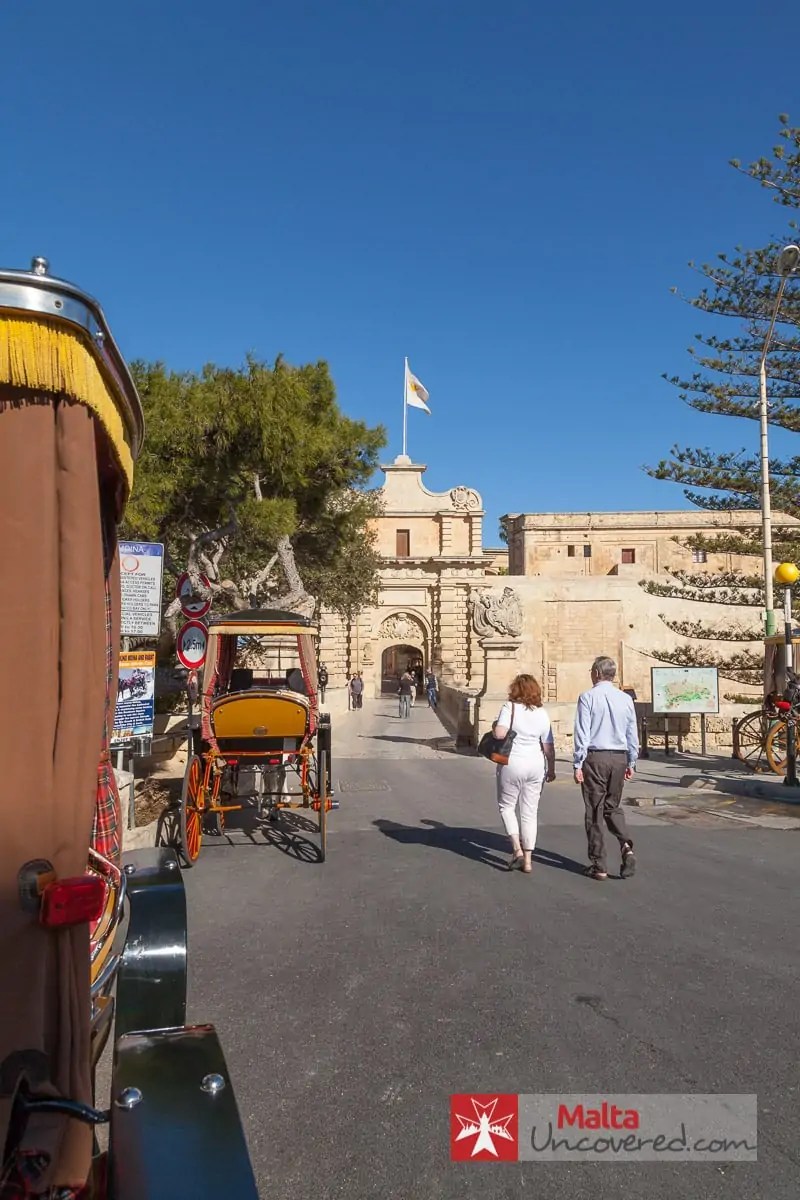
Surrounded by a ditch that has been turned into a public garden, you can wander around freely and enjoy the view of the age-old bastions from underneath. The inner streets are all paved with large stones and cobbles, and you’ll often hear the sound of horse-drawn carriages taking tourists on a tour of the city.
All around you are stately buildings, built at various points in the history of the town and featuring distinct architectural designs from different periods. At its heart, you’ll find the imposing St. Paul’s Cathedral and its small square in front, while a few chapels are open to admire to the public in a few of the smaller streets.
The streets are narrow and winding, and walking along them feels like you’re trying to find your way out of a maze, although really and truly, the place is so small it’s hard to get lost. With all the noise of everyday life in the busier parts of Malta, the silence inside the city’s walls is very noticeable and really adds to the magic of the city itself, as well as its panoramic views out over the island.


Save big on sightseeing with iSeeMalta, with hop-on/hop-off buses and boats, combo tickets for museums and the ferry to the Blue Lagoon!
Featuring a mix of medieval and baroque architecture, Mdina has many gems to be discovered.
It’s not just a good location to visit individual museums or points of interest, the city itself is something to behold and experience. A myriad of streets and alleys paved with stone slabs, surrounded by a blend of architectural styles introduced over the centuries, all together make for an impressive place to admire.
The Natural History Museum is located to your right as you enter the Main Gate and is popularly visited. To be fair, the museum could do with a little work and part of the interest is in the building itself: Vilhena Palace. It’s a commanding building, with its beautiful baroque facade and impressive entrance courtyard.
Right opposite the museum, the Torre dello Standardo formed part of the system of watchtowers around the Maltese islands, which together functioned as a communication system. To raise the alarm in case of attack or to pass on the message, a fire was lit and visible to at least two other towers in the line of sight. This tower nowadays houses a small tourist information office, but it’s worth having a quick peek inside.
Easily recognisable in the skyline of Mdina, St Paul’s Cathedral (Pjazza San Pawl, in the centre), with its baroque cathedral, bastions, and palaces, is an imposing landmark visible throughout central Malta, The Cathedral is the architectural heart of this elegant, ancient walled city, and ties on the site of a much earlier Norman church destroyed by a violent earthquake in 1693.
The rebuilt cathedral was decorated with various artefacts that survived the earthquake and can still be admired by visitors today. The floor is covered by large marble gravestones commemorating the several bishops and canons, as well as laymen from noble families who were buried in the cathedral.
Originally a seminary, the museum (located across the street on the side of the cathedral to the South) today is one of the most outstanding religious museums in Europe. A small chapel is found on the second floor exhibiting church vestments. It also exhibits an impressive cross-section of sacred art, famous paintings, a coin collection, Roman antiquities, and original documents from the time of the Inquisition.

Check out my two guidebooks full of local knowledge and my best recommendations for your trip, and up-to-date for 2024!
Malta & Gozo guide book
Valletta: An Insider’s Guide to Malta’s Capital
Take the hassle out of planning your trip to Malta and be an informed traveller!
The silent city has always been the seat of the Bishop of Malta. The Archbishop’s Palace (next to the cathedral), which was built in 1722, serves as the residence of the Archbishop of Malta.
Palazzo Falson (towards the end of Triq Villegaignon), generally known as the Norman House, is the best-preserved medieval building in Mdina. Built in 1495, it was occupied by the first Grand Master in Malta, Philippe Villiers de L’Isle-Adam, when the Knights of Malta arrived here in 1530.
The ditch around the town was landscaped and upgraded in recent years, which makes it a great place for a little stroll. You can enter the ditch from the small parking area at one of the side gates (Greeks Gate) or from a staircase to the side of the il-Veduta restaurant.
After Grand Master Vilhena confiscated the original Ministerial Palace for his private use, the Universita (local government) found its new seat in this building. It sits at the square’s edge in front of St Paul’s Cathedral. During the revolt against the French, a national assembly came together here.
You can get an excellent view towards the East of Malta from the bastion at Triq is-Sur, at the back of Mdina. Good for a quick peek or for a quiet spot to enjoy the silence and view on a summer’s night.
Palazzo Gatto Murina, one of the earliest ‘Siculo-Norman’ structures (i.e. built between 1100 and 1530), was erected during the latter part of the 14th century. An audiovisual show, “Tales of the Silent City”, is housed inside the Palazzo.
Tucked away in Triq il-Villegaignon, this is a beautiful chapel that looks very unassuming from the outside. It’s open to the public on most days and worth taking a peek inside.
The Xara Palace is probably the most well-known boutique hotel in the area, situated in the heart of Mdina. It’s housed in a 17th-century palace and offers luxurious accommodation (with a price tag to match) with different levels of rooms (most with a great view, as you can imagine).
Another elegant boutique hotel in Mdina is Palazzo Bifora, showcasing 12th-century architectural features and a rooftop swimming pool.
Get my recommendations on the best day trips, boat trips, excursions and activities and book in advance!

Rabat also has its share of historical sites.
Howard Gardens is one of the biggest public gardens in Malta and can be found right outside Mdina. These gardens form a natural border between Rabat and neighbouring Mdina. There are a few kiosks around with tables and chairs, and it’s pretty peaceful and quiet there. Great for a lazy Sunday morning coffee and snack.
The Maltese islands are rich in late Roman and Byzantine burial sites. Both sites contain a typical complex of interconnected, underground Roman cemeteries that were in use up to the 4th century AD. St Paul’s Catacombs represent the earliest archaeological evidence of Christianity in Malta.
Both sites are accessible from the middle of Bajjada Triq Sant Agata, in the village core of Rabat.
The mosaic pavements in the ‘Roman villa’ at Rabat rank among the finest and oldest mosaic compositions from the western Mediterranean, alongside those of Pompeii and Sicily. They were discovered in 1881 just outside Mdina in the remains of a rich and sumptuously decorated townhouse of the Roman period.
Once home to one of the Chaplains of the Order of St John, the Wignacourt Museum (Triq il-Kullegg, around the corner from the Paris Church of St Paul) is a well-preserved representation of what life was like for the Chaplains of the day. Named after Grand Master Alof de Wignacourt, the museum is well worth a visit for its magnificent setting and beautiful baroque architecture alone.
At the museum of Casa Bernard (46 Triq San Pawl, you can catch a glimpse of how Maltese nobility lived in this well-kept and beautifully restored 16th Century Palazzo. Passed on through generations, descendants from its original owners actually still live there. Guided tours are offered, and it makes for a very unique place to visit.


There isn’t an awful lot of choice when it comes to hotels in Rabat, although there are a few very good options to consider if you’re looking to stay in a part of Malta that is less touristy and busy.
Point de Vue is Rabat’s oldest hotel and a budget-friendly option, ideally located at the top of the hill leading up to the area. Choose a room at the rear opening onto the countryside for extra comfort.
There are more high-end options, such as Casa Azzopardi Guesthouse, a beautiful Maltese house with all the amenities, and 100 Boutique Living.
On the outskirts of Rabat, Maple Farm Bed and Breakfast offers high-quality lodging in a very quiet area that’s within walking distance of Rabat and Mdina. It’s a family-run business that gets great reviews and loyal guests.
Mdina and Rabat are located in a quieter part of the island, and once you leave the busier parts like Valletta, Sliema, and St Julian’s, it’s fairly easy to get there. The closest central localities to these villages are Attard, Zebbug, and Mosta, although major road signs in the central part of Malta will include Mdina.
Parking spaces are limited in the area, although on weekdays, it’s not too bad. These are a few options to try (which are all within walking distance the city):
The following direct bus routes stop at Mdina and Rabat:
If you’re staying elsewhere, the journey planner from Public Transport Malta will be of help to plan the best route for you.
You can also take the North Route of the Hop-on-hop-off bus routes. Get your tickets in advance here!
If you opt for a private taxi airport transfer from Malta International Airport, that will cost you around €22, while a shared shuttle bus will cost around €14 for 2 adults (both one-way fares).
Punic remains have been found in the area around Mdina and suggest that Phoenician settlers inhabited the region around 700 BCE. Historians believe that even they fortified the city they then called Maleth. The location was of strategic importance, situated on one of the island’s highest points and relatively far away from the sea.
The Romans also recognized Mdina’s strategic importance and developed the city further, building the Roman Governor’s palace there. It was during the Norman conquest of Malta in 1091 AD that the city’s outline was shaped as we know it today. Its thick surrounding fortifications and wide moat were constructed by the Normans, and much of the architecture dates from the medieval period.
Mdina is one of the few great architectural treats in Malta that did not result from the activities of the Knights of Malta. The oldest city on the island, going back to prehistoric times, the word Mdina derives from the Arabic word ‘medina’, which means ‘city’. The Arab legacy continued even though the Arabs were officially expelled from Malta in 1250 when the Islands were under Christian rule. Thus, the name survived even though the city was referred to as ‘Civitas’ (which means ‘city’ in Latin) or ‘Citta Notabile’.
The city was fortified in medieval times, but its protection in early times must have been its high location on a rocky crag. It is certain that either during the Byzantine or during the Arab occupation of Malta, the fortifications were retracted to the present proportions, perhaps for better defensibility.
A strong earthquake destroyed parts of Mdina in 1693, after which the Knights of Malta rebuilt the cathedral and erected buildings such as Palazzo Falzon and the Magisterial Palace in Baroque style.
The fortress city once extended to the adjoining town of Rabat. Yet the fortified city was subsequently downsized in order to defend it more effectively. Mdina was Malta’s capital city until the Knights of Malta arrived in 1530 and built their headquarters in Birgu (Vittoriosa), which subsequently became their Administrative hub.
Do you have any tips/reviews to share about Mdina? Leave a comment and let me know!

Edward is the Founder and Editor of Malta Uncovered and author of two guidebooks on Malta and Valletta.
As a tourist-turned-expat with Maltese roots, he knows the islands inside out and helps thousands of visitors enjoy a memorable trip every year.


Get the best travel tips from Malta Uncovered delivered to you in bite-sized chunks by email. (Unsubscribe at any time!)
Was this article helpful? Share it with your friends!
Get the most out of your visit to Malta with Malta Uncovered guidebooks – full of local knowledge and up-to-date for 2024!

Avoid the horror museum in Mdina – not worth 5€
Thanks for chipping in that tip Patrick. I haven’t listed in the article for that very reason.
Hi Edward, I plan to go Blue Grotto in a Saturday morning followed by Rabat and Mdina. Is that too rush? Please advise the best route if possible.
Hi Joe, I wouldn’t say so, no. I’d go to the Blue Grotto earlier in the morning, say at around 9am as that’s when most boat tours start their day, it’ll be quieter and the early sunlight is beautiful inside the cave. I’d head to Rabat first for a stroll around town and maybe visiting a few museums if you’re in the mood for it, then a late lunch in Mdina at Xara Palace and an afternoon coffee or tea at Fontanella, after wandering around and exploring the Silent City. I wouldn’t want to recommend a specific route simply because both towns are pretty small and part of the fun there is finding your own way around in my opinion. I hope you enjoy your day!
Hello,
I was thinking about spending our last day/night in Mdina-Rabat in order to enjoy the evening there. It seems though that there is going to be little accomodation and resturants, is that so? Will it be better to just enjoy Mdina during the day? Thank you for your advice.
Hi Beatrice, there are only a few options for accommodation in the area (best bet is Airbnb probably), although you can find a good choice of nice restaurants around and dining in the evening is still pleasant.
Just got back from a lovely week in Malta! Stayed at Maple Farm B&B, complete with swimming pool, though we were not brave enough to use it in March, on the edge of Rabat. The owners even hired a wheelchair for me and took us on a tour of their olive grove and vineyard. The restaurant Fork and Cork in Rabat was brilliant: Masterchef meets Maltese cookery without the fancy prices. Generally Maltese portions elsewhere were huge. Bacchus in Mdina was another good restaurant and we enjoyed listening to the locals practising their band music at the David Adams d’Isla (not sure about that name) in Rabat, just across the road from the Castelleti which we didn’t have time to try out. We could have spend a fortnight just exploring Rabat & Mdina, Don’t go to Valletta on Sunday. All the tourist traps are open but many of the attractions are closed, also no smart cars which I was hoping to use as I have limited mobility, which meant I could only explore the pedestrianised flat ares near the entrance. Keep on with the good work!
Happy to hear you enjoyed your stay Catherine, it is a lovely area. I like recommending Maple Farm B&B – you’re not the first to tell me they’ve gone out of their way to make their guests’ stay a comfortable one.